Unfolding · Part I: The Person · 1.1
Regard: A Stance with Heart
A man on a high-ropes course says: “You know, I don’t like you.” And he has been helping all day. Can you be there for someone, warmly and skilfully, even when you don’t like them? The first exchange of the Fosterer and Wanderer method: regard, observing and showing yourself.
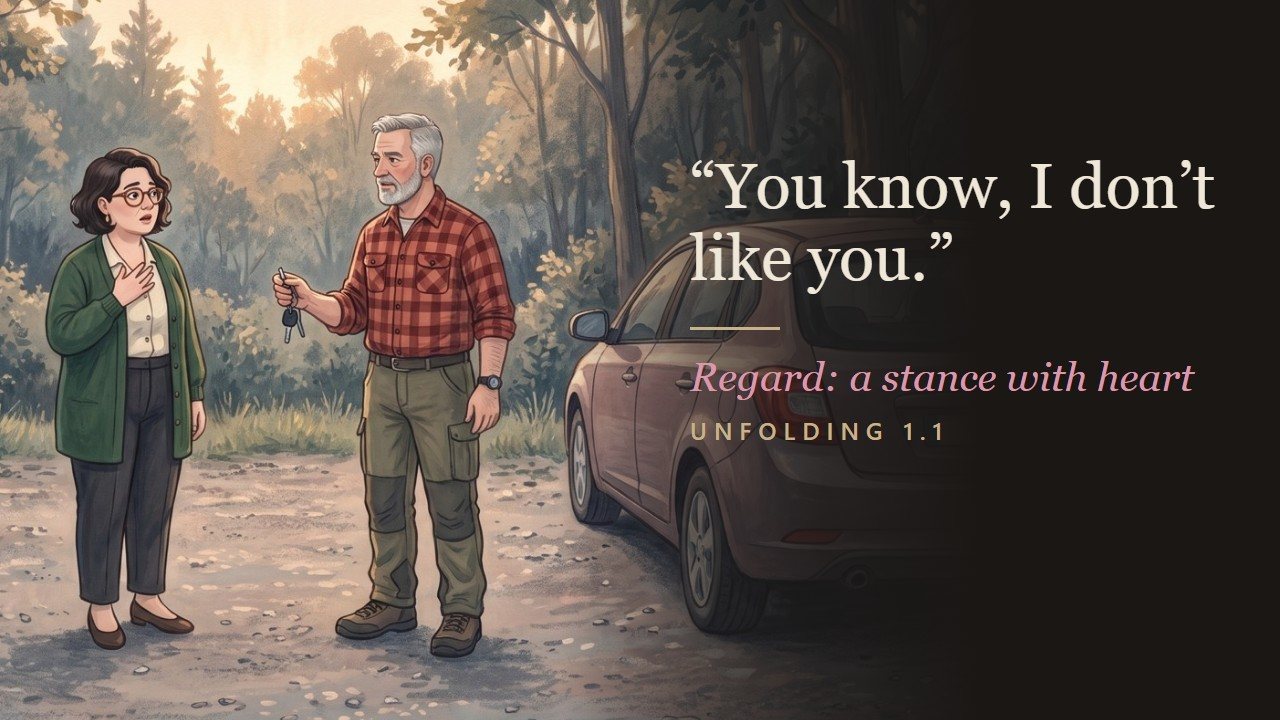
The text of the episode follows, with its diagrams. Below each heading: watch that part on YouTube.
Cold open · The threshold
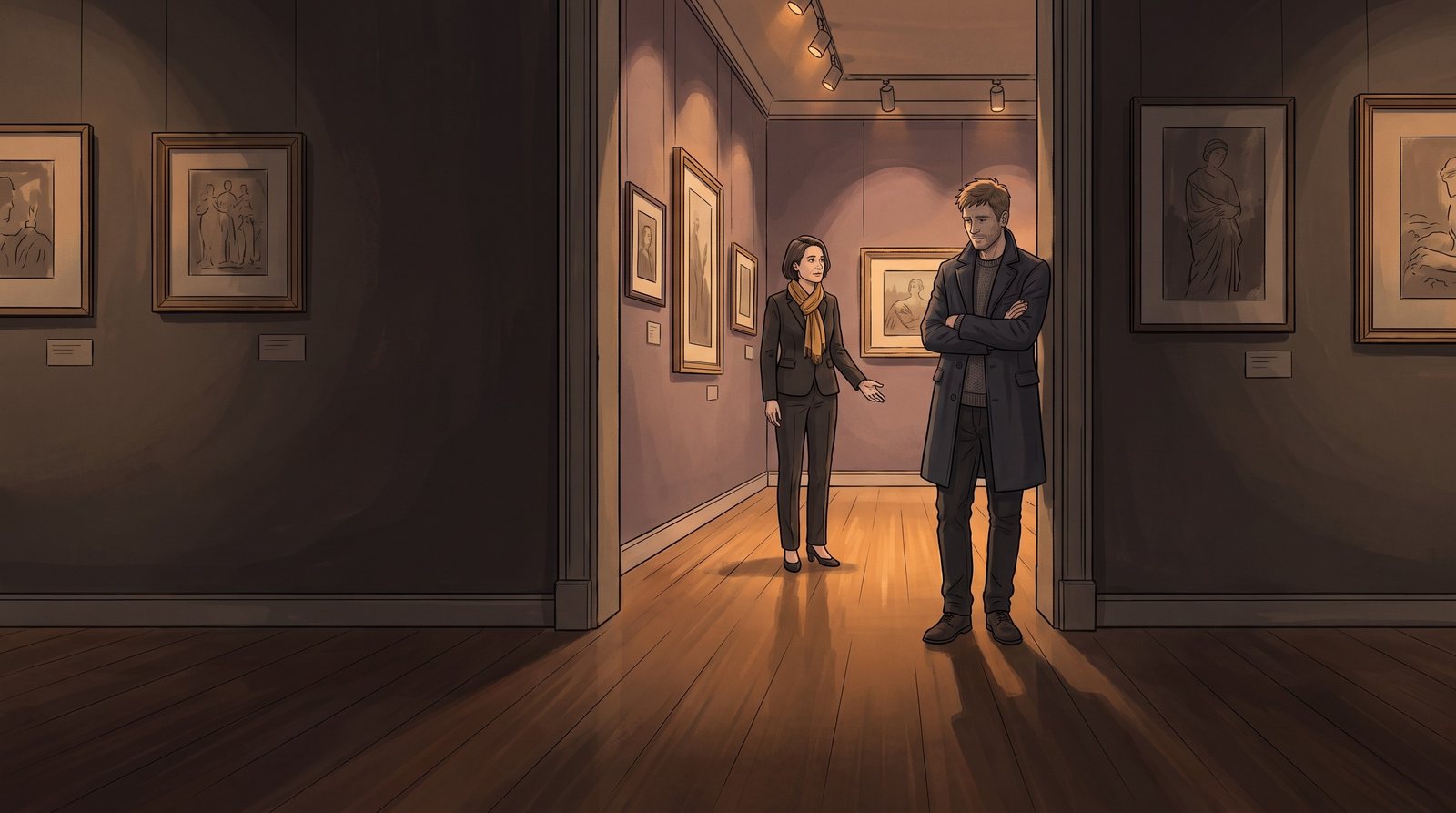
Wanderer All right, then. Show me your method.
Fosterer I don't have one. Not yet.
Wanderer (mocking) A Fosterer without tools.
Fosterer At this level, I am the tool. That's all I have to offer: being here while you show yourself.
Wanderer I'm not showing anything.
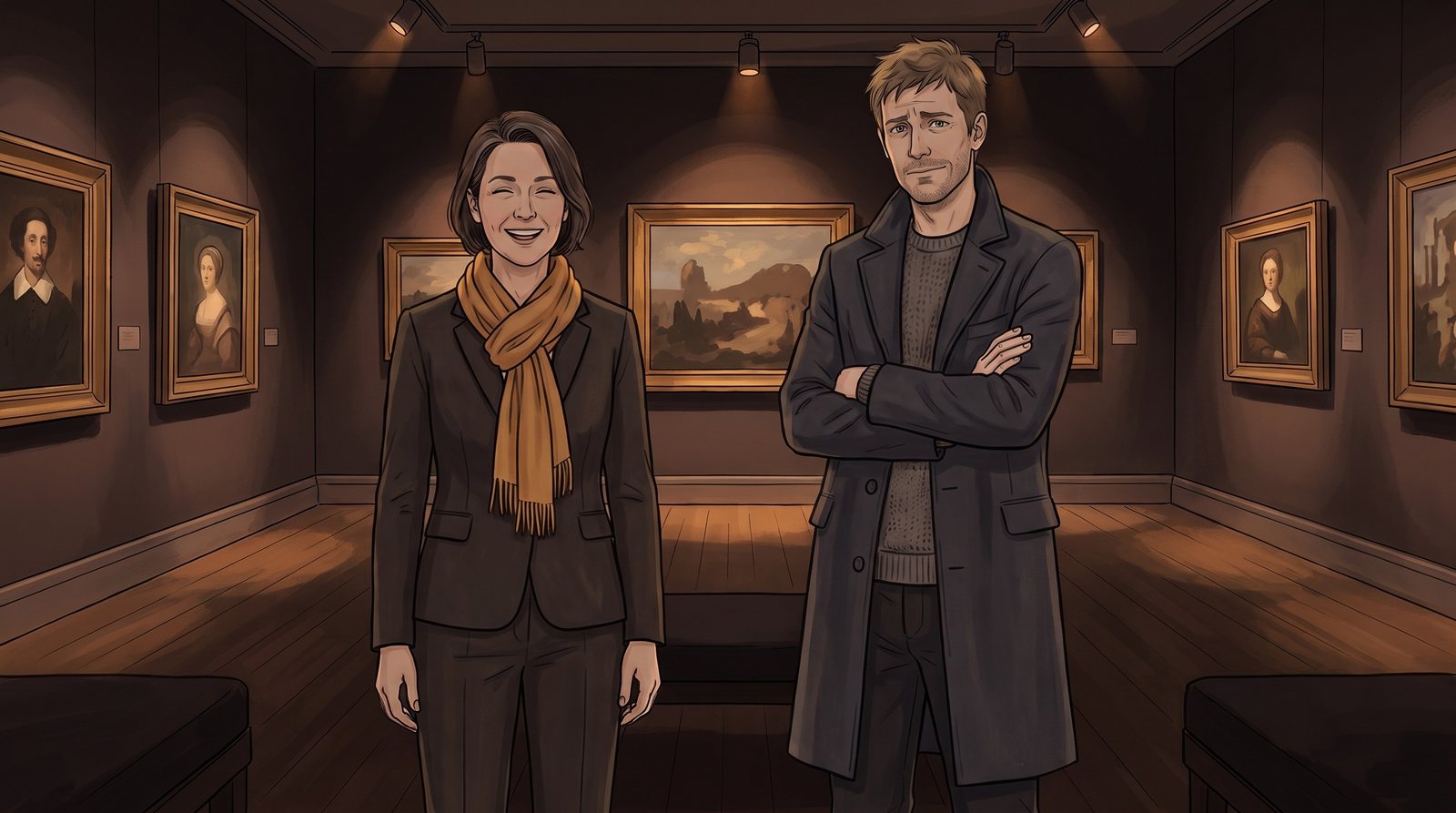
Fosterer You're standing at the threshold with your arms crossed. That's already something.
Wanderer (arms stay where they are) And what if you don't like me?
Fosterer (thinks about it, honestly) Then we'd first have to find out what I can do for you anyway. (nods towards the first picture) Come on, my friend. There's one hanging right here about exactly that.
Exhibit · On the high ropes
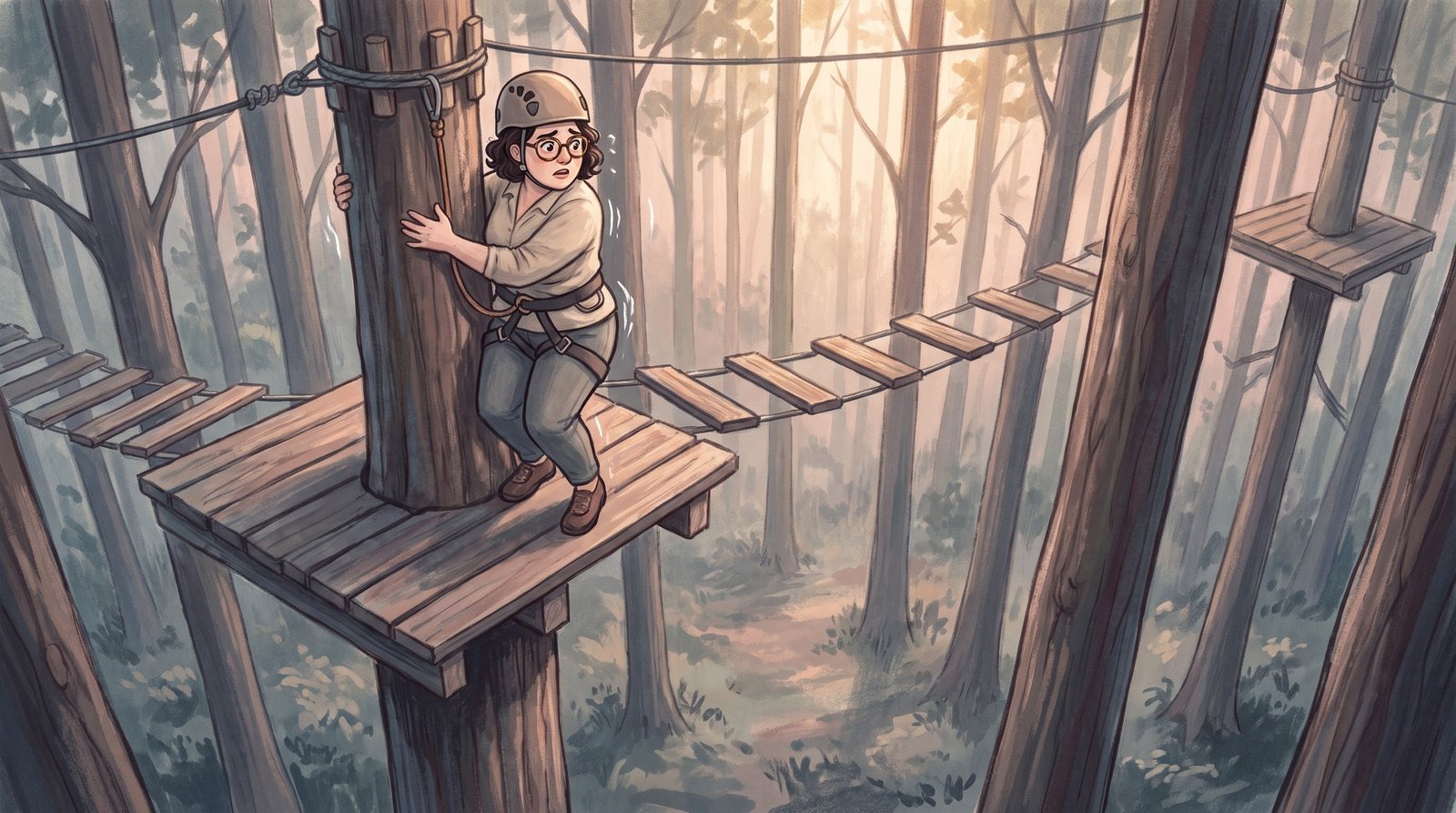
I'm on the train home, still weak after a long operation. Opposite me sits an older man in business casual. We get talking; he's in the training business. I've never been on a high-ropes course, so despite my fear of heights I let myself in for the experiment, and a few weeks later I'm at one of his seminars.
I still remember the twenty minutes I stand shaking on the first platform before the signals from my head actually arrive in my body as movement. When you're overweight, and the safety straps go round your waist but not over your shoulders, the voice in your head spends the whole time picturing the skin giving way and you sliding out of the harness when it counts. So much for the psychological safety they all talk about.
Still, I make it across the first three obstacles, many metres above the safe ground. In between I keep chatting with an Austrian, a restaurateur. Afterwards we're led through station after station — nets, high wires, tree trunks — and again and again this friendly man helps me, because my gymnastic fitness is being tested far beyond what it has.
After the seminar I run into him in the car park.
The Austrian You know, I don't like you. But then, you can't force liking someone.
I (taken aback) What do you mean?
The Austrian I wanted to know whether you can still be there for someone, and help them, even if you don't like them. And apparently you can.
The Austrian That was interesting. The rest of the seminar was of no interest to me. All the best.
Still speechless, I get into my car. I don't know whether to cry or to laugh. Luckily, a tear can do both.
Exhibit · The welcoming face

And a second one, shorter, many years later. I'm tuning in before a workshop, and I resolve to let myself drop completely into the person-centred stance. I think of the loving-kindness meditation: unconditional acceptance, no matter how the other person shows up. I cultivate my best welcoming face; everything in me is set to acceptance. One by one the participants come into the room, and I let them share in my sense of well-being. I feel better than I have before a seminar in a long time.
At the end, I'm chatting with a participant in the foyer.
I (enthusiastic) Did you enjoy the workshop today?
Participant Yes. The topic was great, and so was the way you ran it. At the beginning you were a bit odd, but once you started the seminar, that impression changed quickly.
I (unsettled) Go on.
Participant Well, when we came in, you just stood there and hardly said anything. It felt a bit strange. You didn't really know what to make of it.
I (trembling inside) Thank you for that. That helps me enormously.
Fosterer and Wanderer · Regard
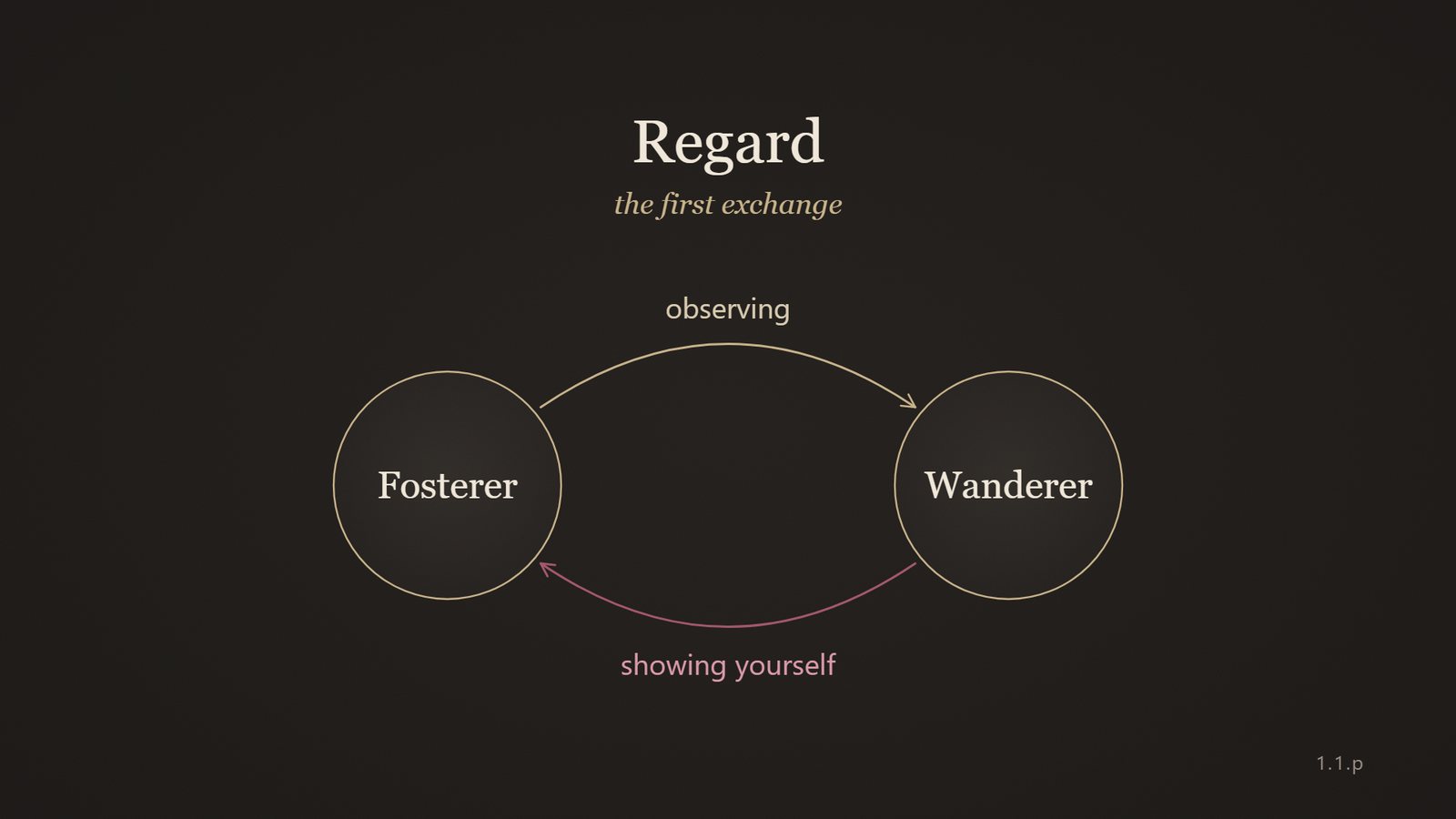
Regard is a pair of two movements: observing on one side, showing yourself on the other. And like every exchange in this method, it lives on reciprocity. Whoever observes without showing themselves becomes an examiner. Whoever shows themselves without being observed stays alone.
The Wanderer has arrived the way people arrive at the start of any accompaniment: on the floor, arms crossed, and the only thing they show is defence. That's less meagre than it looks. Defence is already a way of showing yourself: the first material of the first exchange. The Fosterer, meanwhile, leads, talks, means well, and inside runs the small voice that keeps count and sticks on labels.
Fosterer (inner voice) What a pedant.
The gap between that voice and the friendly mouth is the real stage of this chapter. Because the Fosterer shows themselves too, whether they want to or not. As long as the Fosterer merely has a stance instead of showing it, the Wanderer tests the only thing there is to test at this point: whether they are meant as a person, or as a project.
Observe · Your own reaction
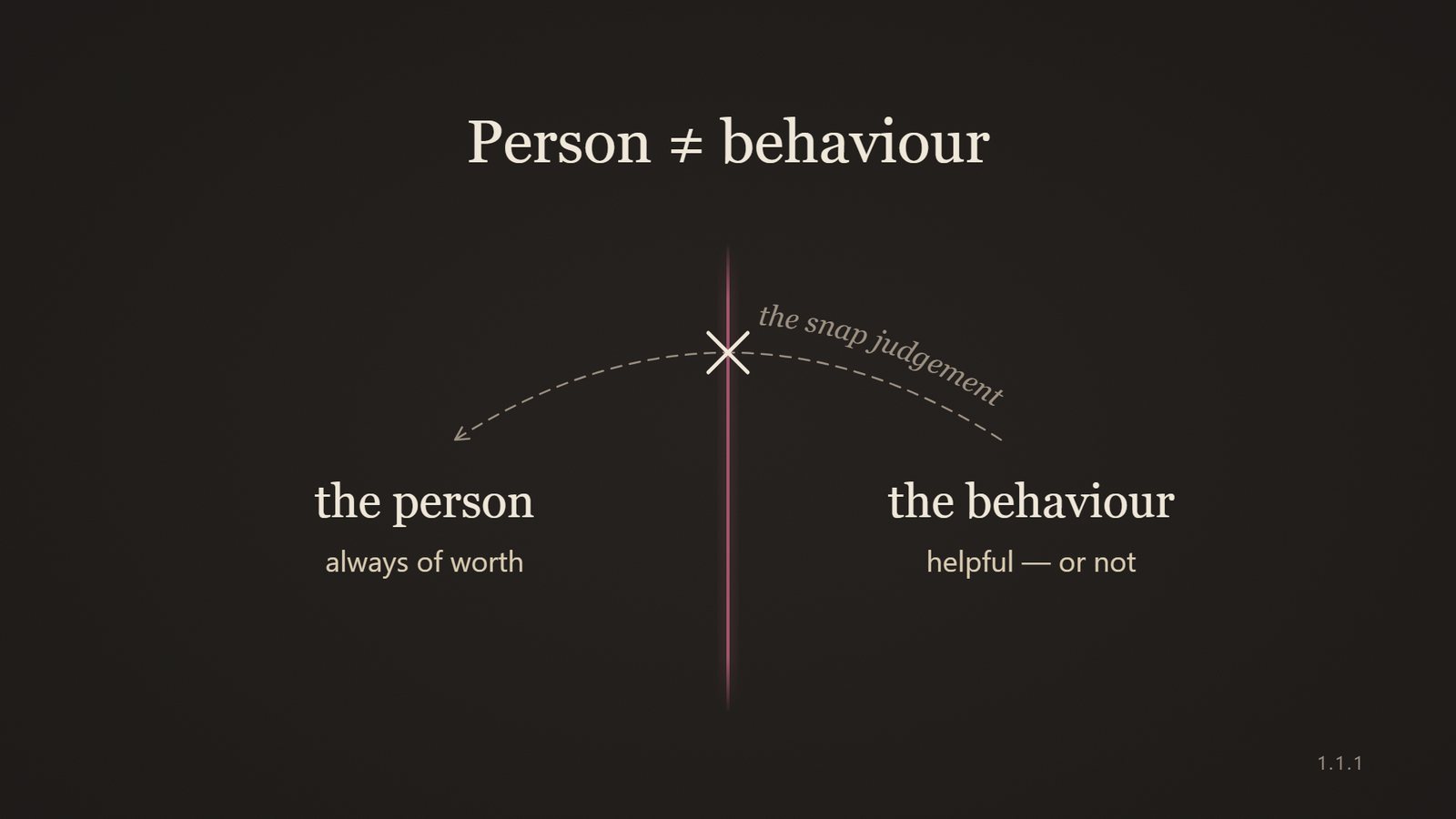
Before you can observe anything in someone else, you had better observe yourself. Because the first thing that leaps up in every encounter is your own System 1: the snap judgement that fuses the person with the behaviour; the label that sticks after one "difficult"; the fixing reflex that mistakes listening for repairing.
The Austrian on the high ropes had made his judgement long before: unlikeable. And he carried, steadied and helped all the same. Nothing about his judgement was a flaw of character. These are habits of perception, and they are the raw material of this chapter: once you see your reflexes coming, you no longer have to follow them.
Understand · Three conditions, one stance
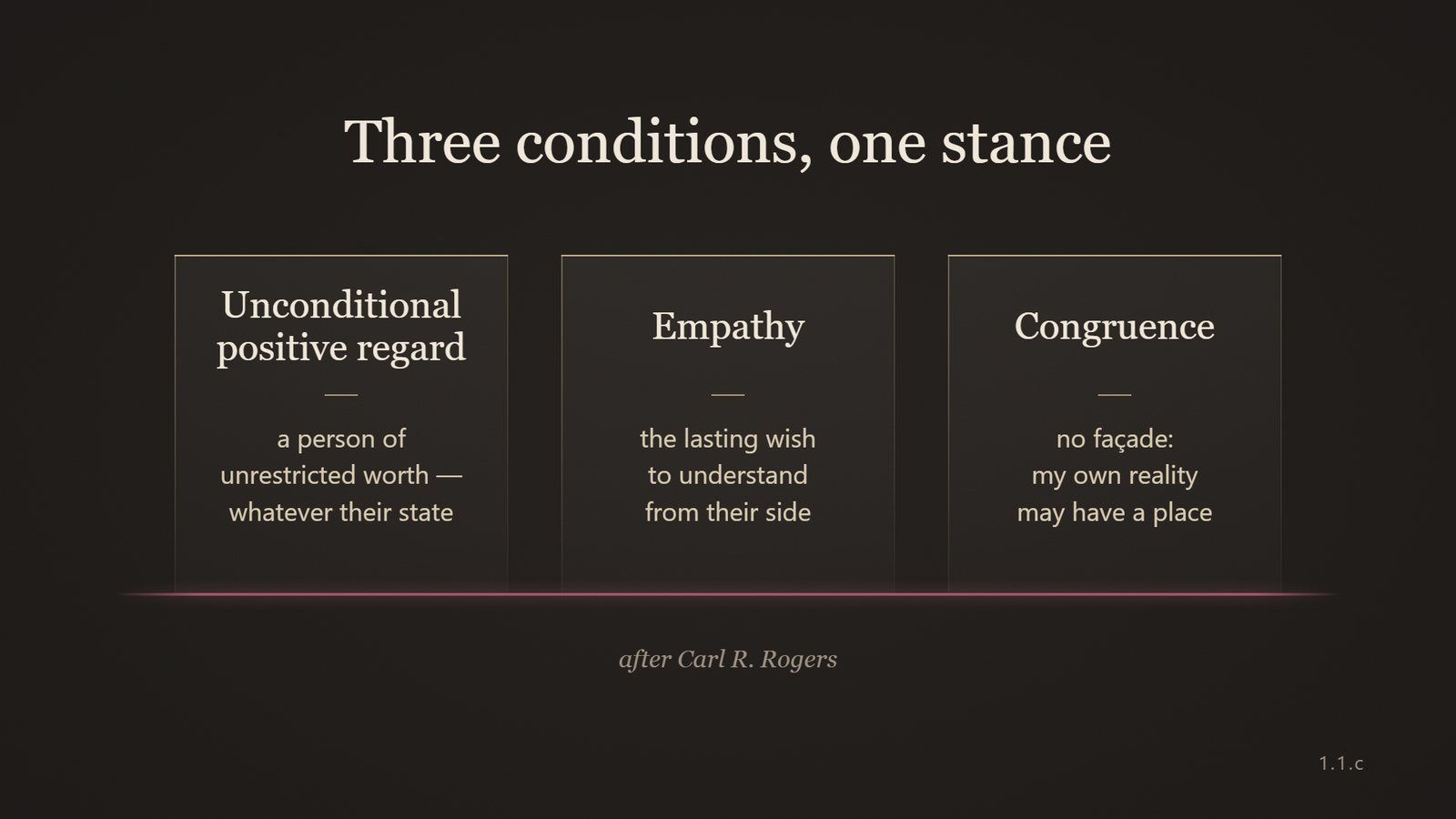
Carl Rogers captured the stance we're talking about in three conditions. Unconditional positive regard: the other remains a person of unrestricted worth, whatever their state, behaviour or feelings. Empathy: the lasting wish to understand from their side, free of moral and diagnostic judgement. And congruence: I build no façade; my own reality may have a place in the relationship.
Two refinements make the difference in everyday life.
First: a stance needs action. The workshop scene shows it. Everything in me was set to acceptance, and what arrived was a person who "just stood there and hardly said anything". Humanity that doesn't express itself in skilful action stays invisible to the other person; at worst it seems strange. Nor can you see anyone's inner stance; at best you see its expression, their actions. Yet our System 1 happily diagnoses the stance behind them, and mostly gets it wrong. That's why the first principle isn't "make people welcome", but: welcoming also means showing warmth.
Second: acceptance only gains weight when it is carried by understanding. Warmth without empathy is like lighting without eye contact: bright, but nobody feels seen. And the other way round, understanding without warmth carries the judgement along with it. The man on the high ropes is the rare exception, where help arrived even without liking, because he was there: reliably, with his hands. Perhaps the will to dare that experiment is the stance.
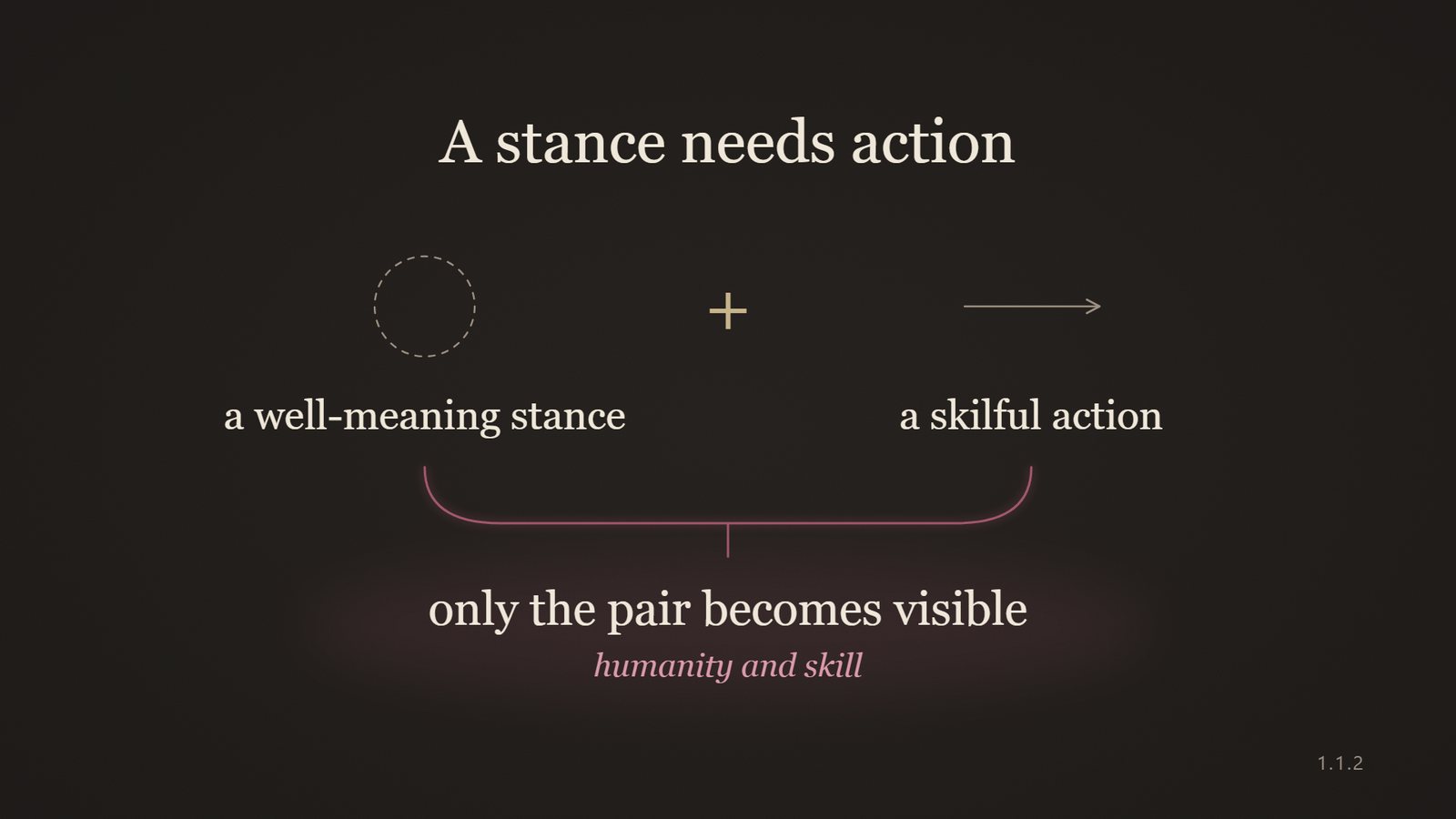
Practise · One: Welcoming also means showing warmth

Accept the Wanderer as they have become, and keep your own reactions to who they are in check, so that the work of fostering can happen apart from them. And don't leave the warmth to chance. It has to leave your body: in words, in looks, in attention.
I learned what that looks like on a day when I felt I had no warmth to give. A lecture series, two of us on stage; I was in charge only of the trimmings: the stories, the laughs, bringing home what my co-presenter had to carry in dry numbers. Five minutes before, I'm sitting in the audience and would rather lie down.
I I feel like something the cat threw up. If I run out of ideas up there, just carry on.
Kris Don't worry. We'll manage.
I drag myself up the little staircase onto the stage without the faintest idea what I'll say, and listen to my inner voice: Listen to him, follow the flow, and do your bloody job.
I open my mouth and draw little black-and-white pictures in the air: mostly embarrassing scenes that led to us being allowed to stand here. Four laughs and two rounds of mid-scene applause later, I drop onto the same seat where I nearly threw up before.
Kris Incredible stage reflex. Up the stairs, like a switch. Down again, and off.
I I felt just as wretched up there. I didn't know what I was doing.
Kris Nobody noticed. They were hanging on your every word.
I Wow. A glass of wine?
Kris Whisky?
I Deal.
Practise · Two: Genuineness needs congruence

Act from the heart, beyond all roles, and learn to act so that your intention actually arrives. How quickly the two fall apart is shown by a scene I have never managed to shake off.
After a long seminar day, I read out the collected cards from the closing reflection, all the worries and troubles that were overcome that day, so as to "file them away". Halfway through the stack I notice that I'm not standing at the lectern as usual: the participants' written worries are falling, one after another, first onto my foot, then onto the floor in front of me. The gap between intention and effect almost turns my stomach; my pressure to perform and my fear of admitting the mistake make me slide further and further in. The last cards fall, and I look into the tear-filled eyes of a participant.
I (to the co-trainer, begging for help) How do we go on from here?
CO-TRAINER: Well, I think we have one more topic to work on here.
I (grateful for a moment to breathe; then, to the participant) What have I just done…
Participant 2 (in tears) You just threw our worries and troubles, our work from today, on the floor. As if they were worth nothing.
I I'm sorry. I'm truly sorry. That wasn't my intention.
I kneel down, pick up the worries and troubles, push them gently together and lay them on the lectern. Nobody lied in that scene, and yet nothing matched. Genuineness has two kinds of congruence. What I say matches what I feel. And what I do matches what the other person needs. The first without the second is merely sincerity on your own account.
Practise · Three: Understanding begins with empathy and ends with helpfulness
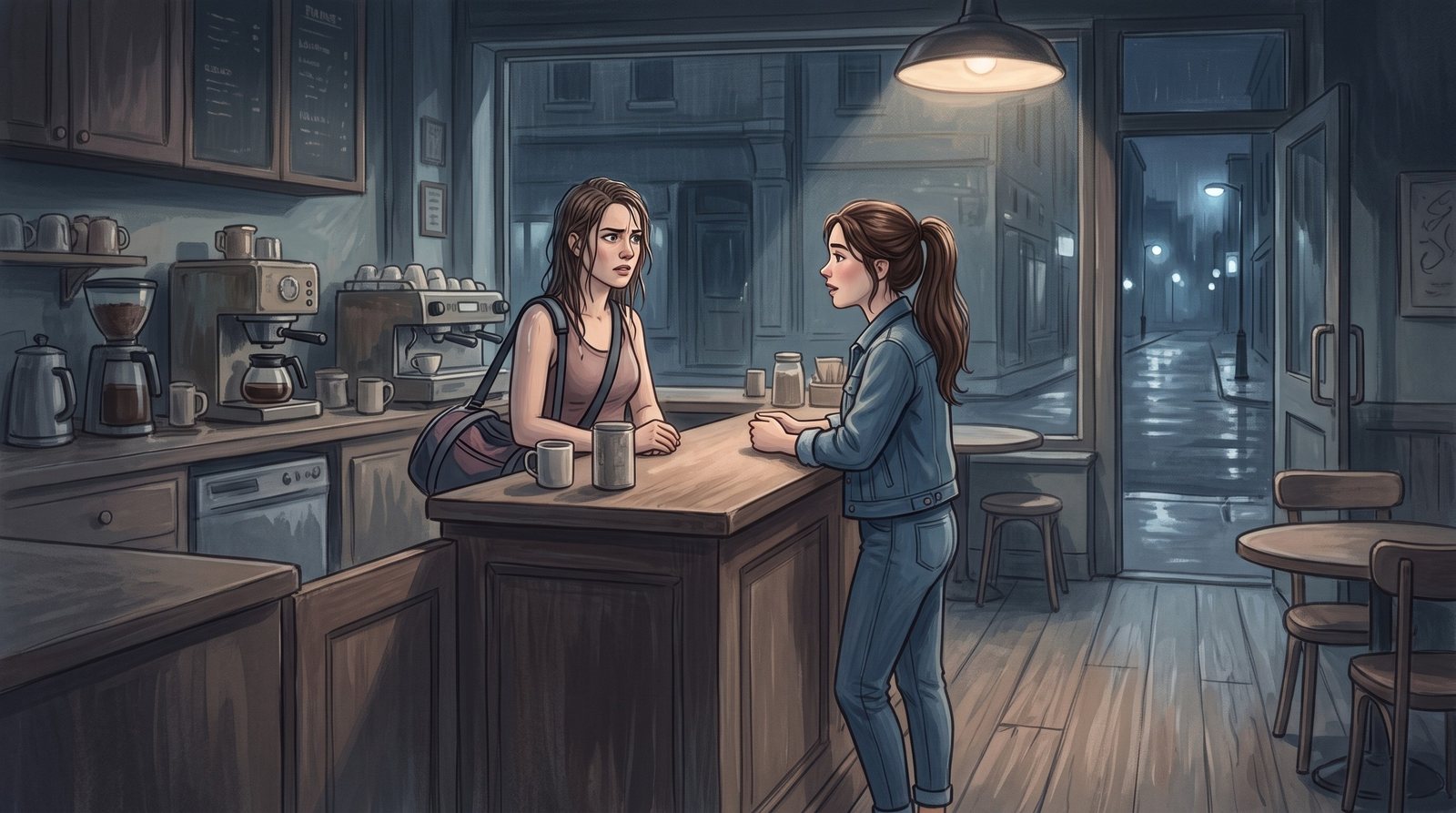
Curiosity-driven feeling-into, until the drive to foster arises by itself. For this, too, there was a night that taught me.
As a student, I arrive at the bus station in San Luis Obispo shortly after ten at night with a broken suitcase: six months of thesis work ahead of me, no room, and no idea that it's Labor Day weekend. After a change of plans I hadn't seen coming, getting straight on the Greyhound was naive. That SLO is the favourite getaway of the whole area, I truly didn't know when I got on. In the only coffee shop nearby with its lights still on, I fall into conversation with a woman who has just come from the swimming pool.
The Woman (aghast) You don't know where you're staying yet?
I I don't have a room yet. Instead of looking in San Francisco, I got on the Greyhound.
The Woman (suddenly decisive) Throw your cases in the back of my truck. I'll at least take you to the nearest Motel 6. You can work it out from there.
At the motel the receptionist finds out the whole town is booked up, and keeps phoning anyway, one partner motel after another, on the verge of offering me a room in his own home, until he manages to merge two reservations.
Receptionist I've got a room you can keep all week.
No obligation, no shared history. Only this: here is a person with a problem, and I can solve it. Empathy that stops where it understands is observation. Understanding is only complete when it flows into helpfulness.
Practise · The workbench
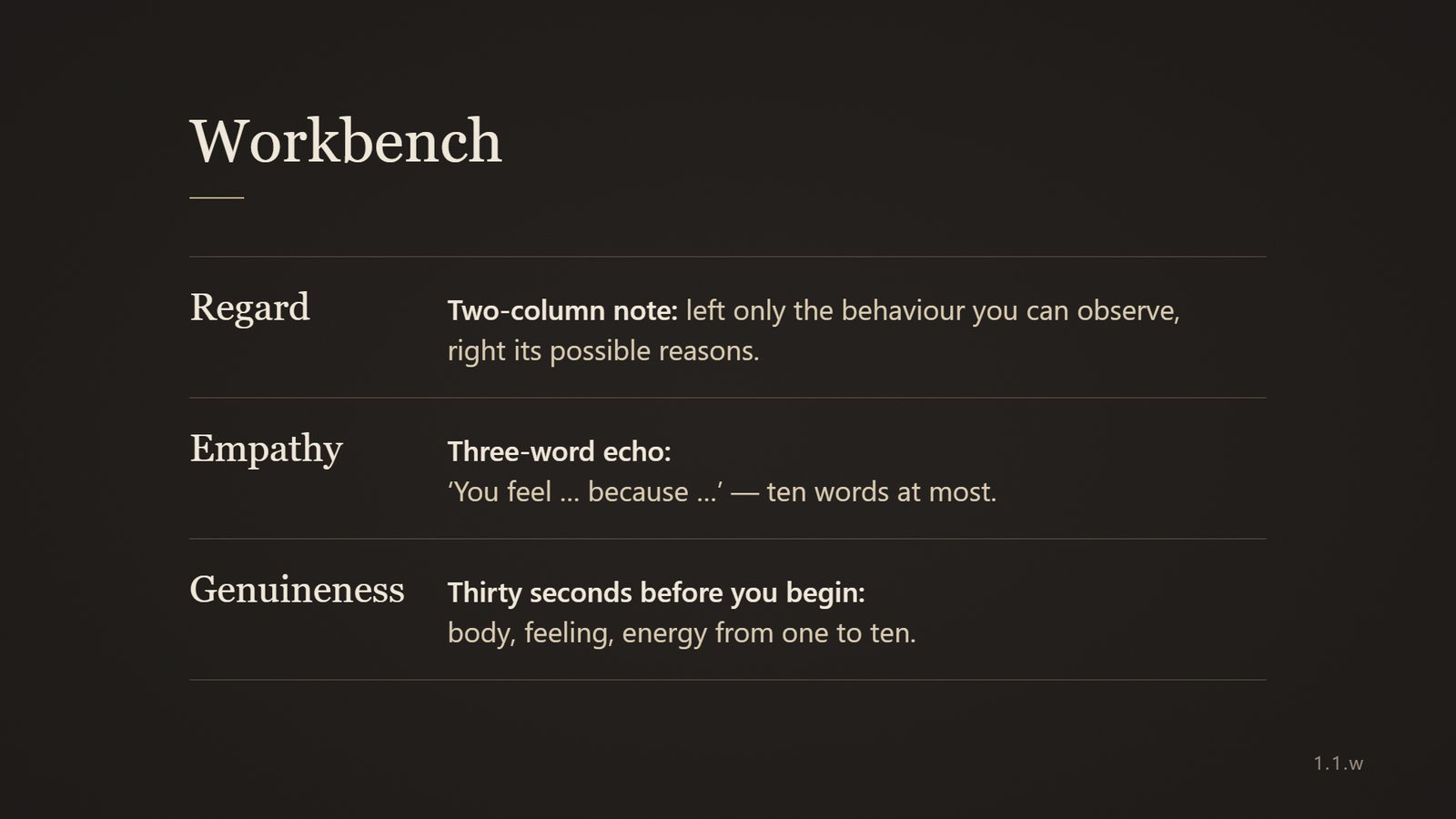
Three small exercises to take with you. A two-column note: on the left only the behaviour you can observe, on the right its possible reasons. A three-word echo: "You feel … because …", ten words at most. And a thirty-second check before you begin: body, feeling, energy from one to ten.
Mirror
Which of the three pillars do you find hardest, and where especially?
Whom around you have you inwardly stamped and filed? What might be the positive intention behind the behaviour that bothers you?
And the Austrian's question, put to you: for whom could you be there, even though you don't like them? And what would that do to the judgement?
Echo
Wanderer That doesn't sound like a stance with heart. That sounds like an experiment.
Fosterer (thoughtful) Perhaps the will to dare the experiment is the stance.
Wanderer (after a pause) In the prologue I was your experiment. Whether someone you don't like can be moved. I'm not saying that as an accusation. Only as an observation.
Fosterer (inner voice, after a short silence) Why does that rattle you so? Because it's true?
Wanderer Earlier you assured me you wanted to be my ally. And then you preached me a sermon on the dangers of sitting. Your stance turned into lip service, not into behaviour that fosters.
Fosterer (calmer, sincere) I would never have said it out loud. The Austrian did. That's the difference.
Wanderer (almost reluctantly) He'd probably have found me unlikeable too.
Fosterer (laughing softly) Yes. I think so too.
Sources
- Carl R. Rogers, Client-Centered Therapy (1951) and On Becoming a Person (1961).
- Daniel Kahneman, Thinking, Fast and Slow (2011).
The stories are drawn from three decades as an employee, leader, coach and facilitator. Places, times and people are changed, and some scenes are composed from several experiences; they allow no reliable conclusions about any company or person. The illustrations and the voices of the episode are made with AI.